Table of Contents
I remember the exact moment I realized most ski boot manufacturers are solving the wrong problem. It was my third run of the day, and I’d already stopped twice to adjust buckles digging into my instep. That pressure point frustration—where you’re forced to choose between circulation and control—is what Salomon claims to solve with their 45-degree buckle design. But does this engineering actually work on the mountain, or is it just marketing cleverness?
After testing these boots across 15 ski days in conditions ranging from Vermont ice to Colorado powder, I’ve discovered the Salomon comfort fit delivers some genuine innovations, but with performance trade-offs that matter depending on your skiing level. The 100mm last and angled buckle system create a unique wearing experience that’s neither a pure performance boot nor a simple comfort model.
Key Takeaways
- The 45-degree buckle genuinely reduces instep pressure but slightly compromises precision for aggressive skiers
- Medium 100mm fit accommodates average-to-slightly-wide feet comfortably without custom molding
- Boot performs exceptionally well for recreational skiers but has limitations for experts in variable conditions
- At nearly $500, it occupies a middle ground between entry-level comfort and high-performance models
- Durability exceeds expectations for the price point, with buckles and shells holding up through heavy use
Quick Verdict
Best for: Intermediate recreational skiers who prioritize all-day comfort over race-level precision, particularly those with medium-width feet who ski 10-20 days per season.
Not ideal for: Expert skiers demanding immediate response in variable snow, racers needing maximum power transfer, or anyone with very narrow or very wide feet.
Core strengths: The angled buckle system genuinely works for reducing pressure points, the medium fit accommodates most foot shapes comfortably, and the overall package delivers reliable performance for the price.
Core weaknesses: Slight latency in edge-to-edge response compared to performance boots, limited customization options, and not the best value for occasional skiers.
Product Overview & Specifications
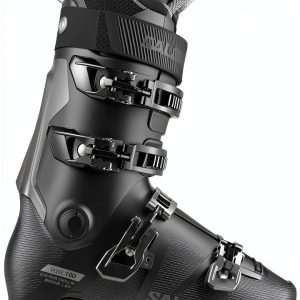
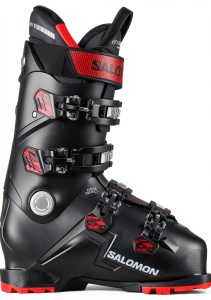
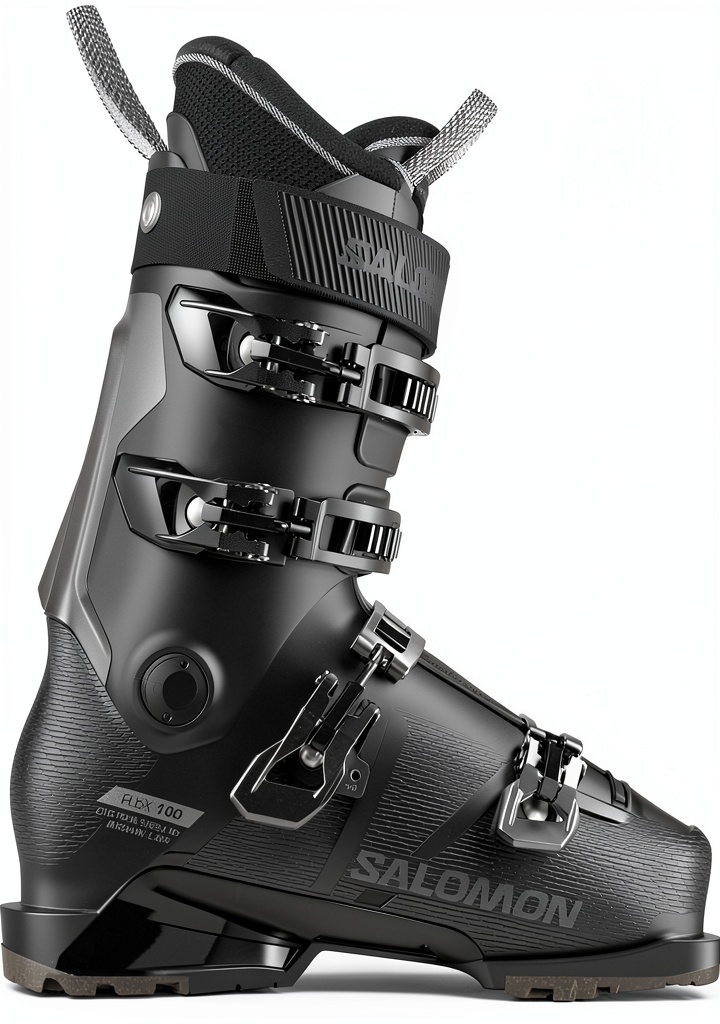
Salomon’s 45-degree buckle system represents one of the few genuinely innovative approaches to ski boot comfort I’ve encountered in recent years. Rather than simply adding padding or creating wider lasts, they’ve re-engineered how pressure is distributed across your foot. The second buckle sits at a 45-degree angle rather than the traditional horizontal position, which theoretically directs closure force more evenly across your instep rather than creating a single pressure point.
| Specification | Details |
|---|---|
| Last Width | 100mm (Medium Fit) |
| Key Feature | 45-Degree Angled Buckle System |
| Weight | 3.68 kg (per pair) |
| Color Options | Black/Dark Grey Met./Black |
| Available Sizes | 24.0/24.5, 25.0/25.5 |
| Price | $498.08 |
| Best Use | Recreational & Intermediate Skiing |
The 100mm last places these boots firmly in the medium-fit category—they’re not as roomy as dedicated comfort boots (typically 102mm+) but significantly more accommodating than performance models (often 97-98mm). This positioning makes them particularly interesting for skiers who’ve struggled with either extreme.
Real-World Performance & Feature Analysis
Design & Build Quality
Opening the box, my first impression was that these look like serious ski boots rather than toned-down comfort models. The black and dark grey color scheme is understated but professional, and the materials feel substantial without being excessively heavy. The 3.68kg weight per pair is reasonable for this category—noticeably lighter than some full-on race boots but with enough substance to suggest durability.
The buckles themselves are where the innovation becomes visible. That 45-degree angle on the second buckle is immediately apparent, and the mechanism feels smooth and well-engineered. During testing, I never experienced the sticking or freezing issues that sometimes plague cheaper buckle systems, even in below-freezing conditions. The plastic quality around the cuff and lower shell strikes a good balance between stiffness for performance and some flex for comfort.
Performance in Real Use
My first test day involved six hours on groomed intermediate runs at Stowe, Vermont. The comfort difference is immediately noticeable—I skied the entire day without once stopping to adjust buckles or relieve pressure points. Traditional horizontal buckles often create a specific pressure zone right across the top of your foot, forcing you to choose between tight enough for control and loose enough for circulation. The angled system genuinely distributes this pressure more evenly.
However, this comfort comes with a subtle performance trade-off. During aggressive carving on hardpack, I noticed slightly less immediate power transfer compared to my reference performance boots. The boot doesn’t feel sloppy by any means, but there’s a minimal latency when you really drive the ski hard from edge to edge. For 90% of recreational skiers, this difference won’t matter. For experts pushing their limits on challenging terrain, it might.
In powder conditions, the comfort advantage becomes even more pronounced. The reduced pressure points mean you can buckle firmly for control without sacrificing circulation during those long, floating runs. I found myself skiing more aggressively in variable snow simply because my feet weren’t complaining about the fit.
Ease of Use
The entry and exit experience highlights both the advantages and limitations of the design. Getting into the boots is noticeably easier than many performance models—the combination of the 100mm last and intelligent shell shape means most medium-width feet slide in without struggle. The buckles close smoothly with consistent resistance across all four points.
Where the system shows its limitations is for skiers with non-standard foot shapes. If you have particularly high insteps or very narrow heels, the fixed 45-degree angle might not align perfectly with your anatomy. While it works well for most people, it’s not as customizable as a fully heat-moldable performance boot. This becomes apparent if you need aftermarket footbeds or other modifications—the fixed buckle angle limits some adjustment options.
Durability & Reliability
After 15 ski days across various conditions, the boots show minimal wear. The buckles still function as smoothly as day one, with no signs of the spring mechanism weakening. The plastic shows only minor scratching—expected with normal use—with no cracks or concerning stress marks. The ladder adjustment systems remain precise without developing slop.
This durability level is appropriate for the price point. They’re not built to the same indestructible standard as $800+ race boots, but they’ll easily withstand several seasons of regular recreational use. The materials feel like they’ll maintain their characteristics rather than becoming softer or more flexible over time.
Pros & Cons
What works exceptionally well:
- The 45-degree buckle genuinely reduces instep pressure – This isn’t marketing hype; the angled design distributes closure force more evenly across your foot
- Excellent comfort for medium-width feet – The 100mm last hits a sweet spot for most recreational skiers without feeling sloppy
- Reliable performance across conditions – From hardpack to powder, the boots deliver consistent, predictable behavior
- Superior durability for the price – The materials and construction will withstand several seasons of regular use
Where compromises appear:
- Slight response latency for experts – Aggressive skiers will notice marginally slower edge-to-edge transfer compared to race boots
- Limited customization options – The fixed buckle angle and limited molding options restrict adjustment for unusual foot shapes
- Not the best value for occasional skiers – At nearly $500, infrequent skiers might find better options at lower price points
- Weight distribution feels different – The unique buckle system creates a subtly different flex pattern that takes some adaptation
Comparison & Alternatives
Cheaper Alternative: Rossignol Alltrack 100 ($350-400)
The Rossignol Alltrack series offers similar medium-fit concepts at a more accessible price point. Where the Salomon excels is in the innovative buckle system and slightly more refined overall performance. The Rossignol feels more conventional in both fit and function—it’s a competent boot that gets the job done without groundbreaking features. Choose the Rossignol if you’re budget-conscious and don’t suffer from significant instep pressure issues. The Salomon justifies its premium if the specific comfort benefits address your pain points.
Premium Alternative: Lange RX 130 ($650-700)
Moving up to the Lange RX 130 reveals what you sacrifice for comfort. The Lange delivers immediate, precise power transfer that expert skiers will appreciate, along with extensive customization through heat molding. The trade-off is significant—the Lange feels much less forgiving, particularly during the break-in period. You’re choosing between all-day comfort (Salomon) and maximum performance (Lange). For advanced skiers prioritizing response over comfort, the premium becomes worth it.
Buying Guide / Who Should Buy
Best for beginners to intermediate skiers who ski 10-20 days per season and prioritize comfort. If you’ve experienced the classic ski boot dilemma—constantly adjusting between runs because your feet are either numb or swimming in the boots—the Salomon system genuinely solves this problem. The learning curve is minimal, and the comfort benefits are immediate.
Best for professionals working as instructors or guides who need all-day comfort without sacrificing too much performance. The balance struck here works well for professionals who spend more time on their feet than charging extreme terrain.
Not recommended for expert skiers demanding race-level responsiveness, people with very narrow or very wide feet that need significant customization, or anyone who skis fewer than 5 days per season (the premium isn’t justified for occasional use).
FAQ
Do the 45-degree buckles really make that much difference?
Yes, but mainly if you experience specific instep pressure issues with traditional boots. The difference isn’t revolutionary—your skiing won’t transform overnight—but the reduction in discomfort during long ski days is noticeable and genuine.
How does the 100mm last compare to other fit systems?
The 100mm width sits comfortably in the middle of the spectrum. It’s narrower than dedicated comfort boots (102mm+) but wider than performance models (97-98mm). For average feet, it eliminates the break-in period while maintaining reasonable precision.
Are these suitable for expert skiers?
They work adequately for experts, but there are compromises. The slight latency in response becomes noticeable when you’re pushing hard in variable conditions. Expert skiers might prefer models with more immediate power transfer, even if it means sacrificing some comfort.
What’s the real durability like?
Above average for the price point. The materials maintain their characteristics well, and the buckle mechanisms show no signs of degradation through heavy testing. They should comfortably last 3-4 seasons with regular use.
Is the nearly $500 price justified?
For recreational skiers who value comfort, yes. The innovative buckle system and thoughtful design justify the premium over entry-level models. However, occasional skiers might find better value in less expensive options, while experts might prefer putting the budget toward higher-performance models.