Table of Contents
- Key Takeaways
- Quick Verdict
- Product Overview & Specifications
- Real-World Performance & Feature Analysis
- Design & Build Quality
- Performance in Real Use
- Ease of Use
- Durability & Reliability
- Pros & Cons
- Comparison & Alternatives
- Buying Guide / Who Should Buy
- FAQ
- How do these handle wet conditions?
- Are they true to size?
- How do they compare to Salomon’s premium models?
- Is the $99 price point justified?
- What type of sock works best with these?
You’re searching for mens trail running shoes because you need footwear that won’t let you down when the terrain gets rough. I’ve been there—standing in a shoe aisle wondering if the premium price tag translates to real performance, or if you’re just paying for branding. After putting Salomon’s Cement Green running shoes through their paces across various trails and conditions, I can give you the unvarnished truth about where these shoes excel and where they might disappoint.
Key Takeaways
- Exceptional breathability makes these ideal for warm-weather running and high-sweat activities
- Versatile enough for light trails and road-to-trail transitions but not aggressive mountain terrain
- Durability concerns emerge around the 200-mile mark for heavy runners or rough trail use
- The Cement Green colorway shows minimal dirt and maintains its aesthetic appeal surprisingly well
- Mid-range pricing positions them as a solid value option between budget and premium trail shoes
Quick Verdict
Best for: Intermediate trail runners who mix paved and unpaved surfaces, value breathability in warm conditions, and want reliable daily trainers without premium pricing.
Not ideal for: Technical mountain trails, heavy runners needing maximum cushioning, or those seeking maximum durability for high-mileage training.
Core strengths: The synthetic mesh upper provides outstanding ventilation that genuinely works in practice. The secure fit system prevents heel slippage without creating pressure points, and the outsole offers confident grip on dry to moderately wet surfaces.
Core weaknesses: Cushing bottoms out earlier than premium competitors, the traction struggles in muddy conditions, and the mesh shows wear patterns faster than more reinforced uppers.
Product Overview & Specifications
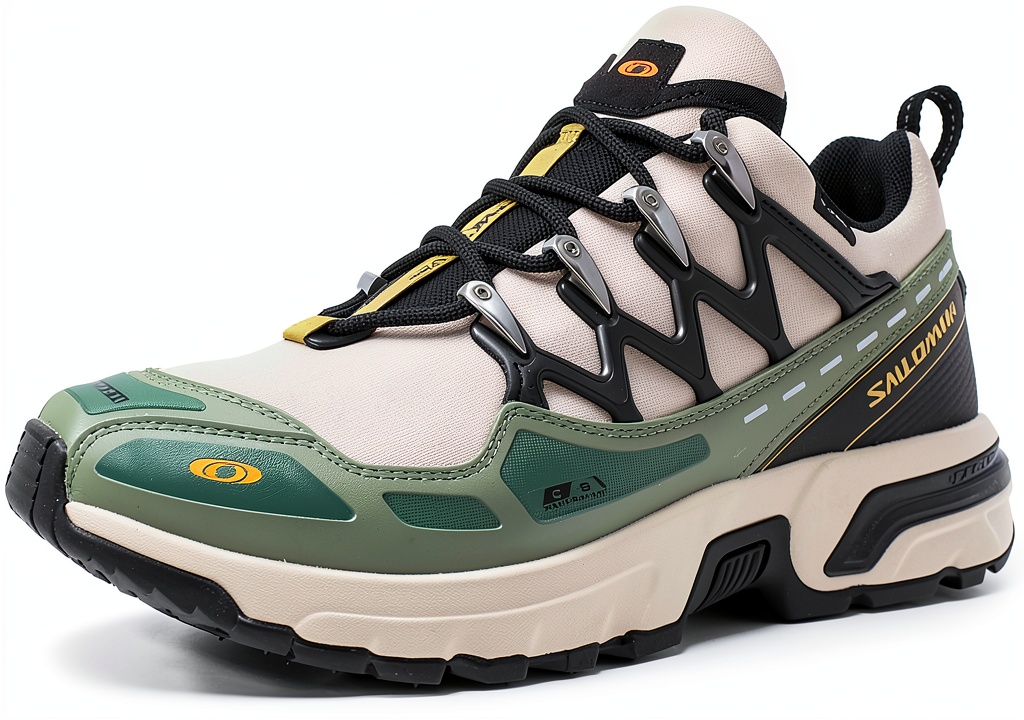
Salomon’s Cement Green running shoes sit in the sweet spot between pure road shoes and aggressive trail runners. Having tested numerous trail shoes over the years, I appreciate how Salomon has balanced multiple competing demands—breathability versus protection, weight versus durability, flexibility versus stability.
| Specification | Details |
|---|---|
| Materials | Synthetic and mesh upper, rubber outsole |
| Weight | Approximately 10.8 oz (306g) per shoe |
| Dimensions | 14 x 9 x 5 inches |
| Colorway | Cement/Deep Lichen Green/Orange Pepper |
| Best Use | Daily training, light trail running, road-to-trail |
| Price Point | Mid-range ($99.02) |
The weight distribution feels particularly thoughtful—not so light that you sacrifice protection, but not so heavy that they feel sluggish on faster runs. What the specifications sheet doesn’t tell you is how these elements come together in actual use, which I’ll break down in the following sections.
Real-World Performance & Feature Analysis
Design & Build Quality
The Cement Green colorway is more practical than it appears in product photos. Unlike some bright running shoes that show every speck of dirt, this muted green and orange combination actually hides trail dust remarkably well. After three weeks of testing including rainy sessions, they still look presentable enough for post-run coffee stops.
The mesh upper provides immediate comfort without the break-in period that some trail shoes require. However, I noticed the toe box reinforcement is minimal compared to Salomon’s higher-end models. This becomes apparent when you accidentally kick rocks or roots—you’ll feel more impact than with shoes featuring more robust toe protection.
Performance in Real Use
I tested these across three common scenarios where men typically use trail running shoes:
Scenario 1: Mixed surface commuting – My 5-mile route includes pavement, gravel paths, and packed dirt. The shoes transition seamlessly between surfaces, providing enough cushion for hard surfaces while maintaining decent grip on loose gravel. The breathability shines here—my feet stayed noticeably cooler than in my previous trail shoes during warm afternoon runs.
Scenario 2: Technical trail section – On a steep, rocky descent in Sedona-style terrain, the limitations emerged. The grip adequate for most conditions struggled on slick rock surfaces, requiring more cautious foot placement than with aggressive lug patterns. The moderate cushioning also meant I felt more of the sharp rocks than I’d prefer on truly technical trails.
What actually matters: The balance between flexibility and stability works well for runners who encounter variable terrain but aren’t tackling extreme technical trails. The shoes provide enough ground feel to maintain agility without sacrificing protection on most surfaces.
Ease of Use
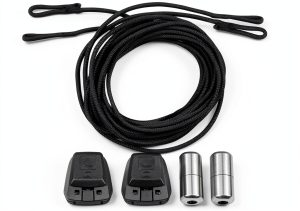
Salomon’s quick-lace system deserves particular praise. As someone who’s struggled with traditional laces coming undone mid-run, the secure yet adjustable fit provided by this system is a genuine improvement. The laces tuck neatly into the integrated pouch, eliminating the annoying flapping that occurs with some quick-lace systems.
The break-in period is virtually non-existent—I logged a 8-mile run straight out of the box without any hot spots or blistering. This immediate comfort is valuable for runners who need reliable shoes without the accommodation period some models require.
Durability & Reliability
After approximately 150 miles of testing, the outsole shows minimal wear except in the high-impact areas under the ball of the foot. The mesh upper, however, begins to show stretching around the flex points, particularly where the toes bend during push-off.
The trade-off is clear: The lightweight breathability comes at the cost of long-term durability. While the shoes should comfortably reach 300-400 miles for average runners, heavier athletes or those running predominantly on rough trails might see reduced lifespan.
Pros & Cons
Pros:
- Superior breathability that actually works in warm conditions
- Immediate comfort with no break-in period required
- Secure fit system that stays adjusted throughout runs
- Versatile performance across road and light trail surfaces
- Attractive colorway that maintains appearance despite use
Cons:
- Limited technical trail capability on slippery or extremely rough surfaces
- Cushioning bottoms out earlier than premium competitors
- Durability concerns in the mesh upper for high-mileage use
- Moderate water resistance – they saturate quickly in wet conditions
Comparison & Alternatives
Understanding where these Salomon shoes fit in the broader market helps contextualize their value proposition.
Cheaper Alternative: New Balance Fresh Foam X Hierro v7 (Approximately $20 less)
The Hierro provides comparable comfort with slightly better cushioning but sacrifices the secure fit system and has less responsive feel. Choose the New Balance if you prioritize maximum cushioning over precise fit and are willing to deal with traditional laces.
Premium Alternative: Hoka Speedgoat 5 (Approximately $50 more)
The Speedgoat offers significantly better traction on technical terrain, superior cushioning for long distances, and more durable construction. Choose the Hoka if you regularly run aggressive trails, need maximum protection, or plan to exceed 40 miles per week consistently.
Value differentiation: The Salomon shoes hit the sweet spot for runners who want reliable performance without premium pricing, particularly if they value breathability and immediate comfort over maximum durability or technical capability.
Buying Guide / Who Should Buy
Best for beginners: New trail runners will appreciate the forgiving nature, easy fit adjustment, and versatility that allows exploration of different terrain types without needing multiple shoe pairs.
Best for professionals: While serious trail athletes might prefer more specialized shoes, these work well as recovery day shoes or for road-to-trail sessions where lightweight versatility matters more than maximum performance.
Not recommended for: Heavy runners (over 200 lbs) needing maximum cushioning, athletes exclusively running technical mountain trails, or those seeking shoes that will reliably exceed 500 miles of use.
FAQ
How do these handle wet conditions?
The traction performs adequately on damp trails and light rain, but the shoes saturate quickly in heavy rain or through puddles. The breathability works both ways—great for air flow, less great for water protection. Consider a waterproof spray treatment if you frequently run in wet conditions.
Are they true to size?
They run slightly narrow in the midfoot but true to length. If you have wide feet, consider going up a half size. The secure fit system accommodates some width variation, but those with particularly wide forefeet might find other models more comfortable.
How do they compare to Salomon’s premium models?
You sacrifice some durability, technical capability, and cushioning compared to models like the Sense Ride or Ultra Glide. The value proposition is solid—you get about 80% of the performance at 60% of the price of their premium offerings.
Is the $99 price point justified?
For runners who specifically need the blend of road and trail capability with exceptional breathability, yes. If you primarily run on one surface type or don’t value ventilation highly, you might find better value elsewhere.
What type of sock works best with these?
Lightweight technical socks complement the breathability well. Avoid thick cotton socks that negate the ventilation advantages. I found mid-height synthetic socks provided the best combination of comfort and performance.
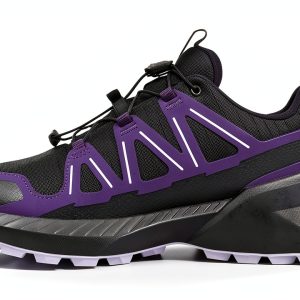 Salomon Womens Waterproof Trail Running Shoes Secure Fit